
Hydro Jetting vs. Snaking at a Glance
| Factor | Drain Snaking | Hydro Jetting |
|---|---|---|
| Main action | Mechanical cable/tool | High-pressure water |
| Best suited for | Localized obstructions and stoppages | Heavy buildup along pipe walls |
| Grease buildup | Can open a path through it | Can wash buildup from suitable pipe walls |
| Objects | May retrieve or break through some objects | Not intended to retrieve solid objects |
| Roots | Cutting tools can address some root stoppages | Some jetters/nozzles can remove root material |
| Pipe cleaning | Depends on tool used | Flushes loosened debris from the line |
| Pipe condition | Condition still matters | Condition should be considered before high-pressure cleaning |
| Cost | Usually lower | Usually higher |
The table describes the methods generally. Actual equipment and results vary by drain size, obstruction, pipe condition, and technician assessment.
How Does Drain Snaking Work?
Drain snaking uses a flexible cable that travels through the pipe.
Different cable attachments can perform different jobs. A straight auger can explore or break through a stoppage, while cutters can address grease, deposits, or roots in appropriate lines.
RIDGID, a major drain-cleaning equipment manufacturer, lists separate augers and cutters for general stoppages, grease, hardened deposits, and root blockages.
When Snaking May Make Sense
Snaking can be useful when:
one fixture has a localized blockage;
an object or concentrated obstruction needs to be reached;
the technician needs a cutting or retrieving tool;
a relatively direct mechanical clearing approach fits the problem.
A blocked kitchen or bathroom fixture may therefore require a very different approach from a heavily coated sewer line.
If the problem is limited to one fixture, see our kitchen drains or bathroom drains information.
How Does Hydro Jetting Work?
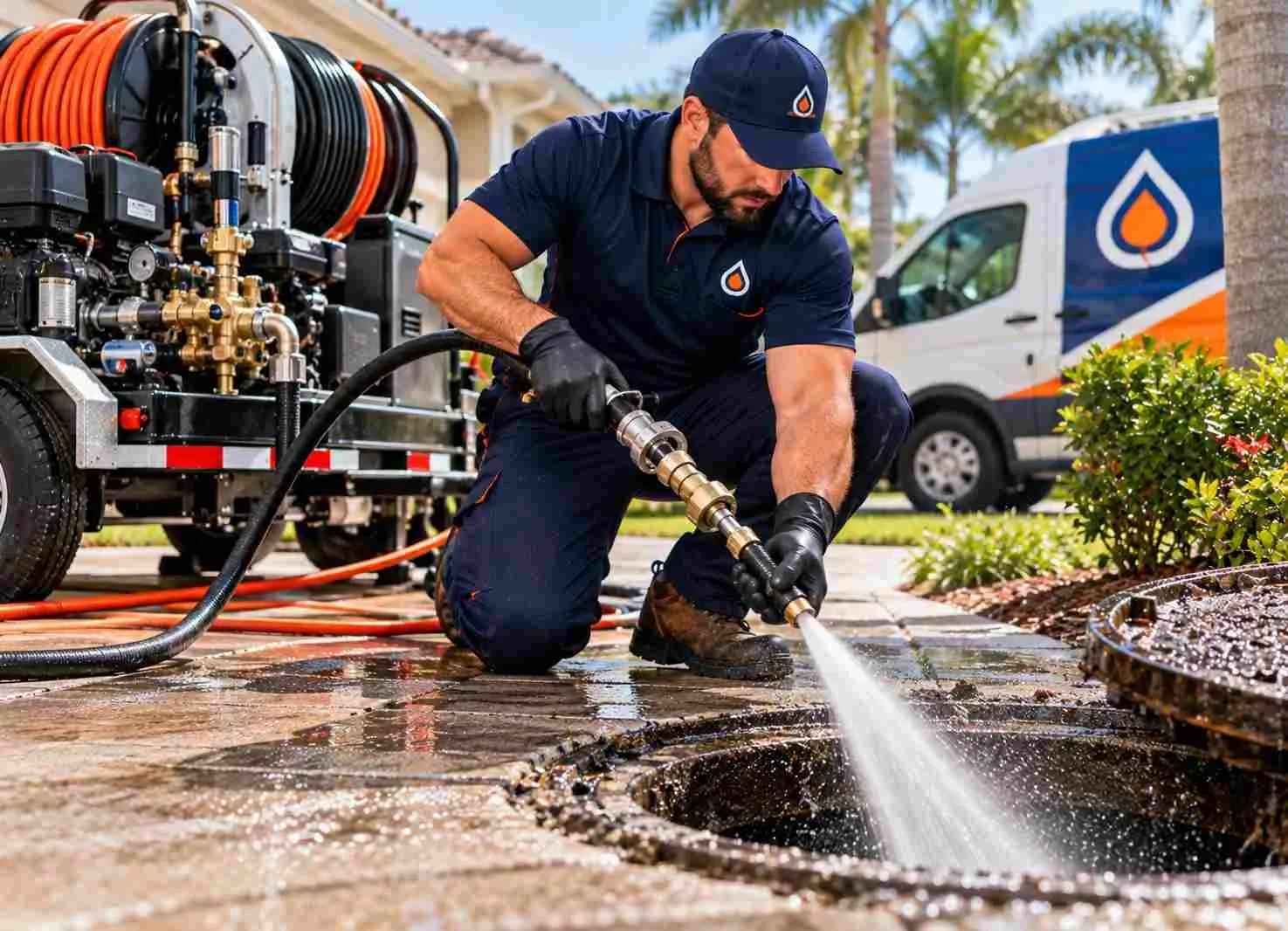
Hydro jetting uses a specialized hose and nozzle to send pressurized water through a drain or sewer line.
Rear-facing jets help move the hose through the pipe while water directed toward the pipe walls loosens buildup. As the hose is withdrawn, the system can flush material out of the line.
RIDGID describes its professional water jetters as equipment designed to remove sludge, soap, and grease buildup while scrubbing and flushing the line.
You can review the manufacturer'swater jetting equipment guidance for a technical example of how professional jetters are designed.
When Is Hydro Jetting More Useful?
Hydro jetting can make sense when the goal is not simply to create an opening through one obstruction but to remove substantial buildup from a suitable section of pipe.
Examples may include:
Grease and Sludge
Accumulated grease, soap, sludge, or sediment can coat pipe walls rather than forming one neat obstruction.
Water jetting can remove and flush away this type of material when the line is suitable for the method.
Recurring Buildup
If a line repeatedly loses flow because significant material remains along the pipe walls, simply creating another small opening may not provide the desired level of cleaning.
Longer Drain Sections
Jetting can clean through sections of line rather than focusing only on the immediate point where flow stopped.
Our hydro jetting page covers that service in more detail.
Is Hydro Jetting Always Better Than Snaking?
No.
A hydro jetter is not a universal replacement for a drain snake.
If a solid object needs retrieval, a mechanical tool may be more appropriate. Certain localized stoppages may not require full-line jetting. And if the pipe itself is damaged or in poor condition, the technician may need more information before selecting an aggressive cleaning method.
Likewise, snaking is not automatically “worse” because it is mechanical. Professionals can use different cable heads and cutters depending on the obstruction.
The useful question is:
What method best matches the blockage and condition of this particular drain?
Can Hydro Jetting Damage Pipes?
Professional jetting equipment uses significant water pressure, so pipe condition matters.
That does not mean hydro jetting automatically damages older pipes. It means the cleaning method should match the condition of the drainage system.
RIDGID's drain-cleaning instructions specifically warn that cleaning equipment may not be effective—or could contribute to damage—when a drain is already in poor condition. The manufacturer recommends visual inspection when pipe condition is uncertain.
A camera inspection can therefore be useful when there is concern about deterioration, damage, repeated blockage, or an unknown line condition.
What About Tree Roots?
Roots require a more specific assessment.
Mechanical drain machines can use specialized root-cutting attachments. Water jetters may also use equipment designed for root material in appropriate lines.
But clearing roots does not repair the crack, joint, opening, or defect that allowed roots to enter.
That distinction will be covered separately in our upcoming tree roots in drain lines guide.
How Do You Decide Between Snaking and Hydro Jetting?
Think about four questions:
1. What is blocking the pipe?
A solid obstruction and heavy wall buildup may require different methods.
2. Is the problem localized or recurring?
One first-time fixture clog is different from a line that repeatedly loses flow.
3. What condition is the pipe in?
Unknown or questionable pipe condition may justify inspection before aggressive cleaning.
4. What is the goal?
Sometimes the goal is to open a blockage. In other cases, the goal is to remove significant accumulation from the pipe walls.
If you are still determining why the drain keeps blocking, our guide to clog causes provides the broader cause-based explanation.
Which Method Costs More?
Hydro jetting generally costs more than ordinary mechanical drain clearing because it requires specialized equipment and a more involved cleaning process.
However, price alone should not determine the method. Paying for jetting when a simple mechanical clearing is appropriate wastes money, while repeatedly clearing a heavily coated line without addressing the buildup may also be inefficient.
Our drain cost guide explains the pricing factors separately.
The Bottom Line
Choose between hydro jetting and snaking based on what is inside the pipe, where the problem is located, whether it keeps returning, and the condition of the line.
Snaking uses mechanical tools to reach and break through specific obstructions. Hydro jetting uses pressurized water to remove and flush buildup from suitable drainage lines.