
What Is Actually Inside Drain Cleaner?
Chemical drain openers do not all work the same way.
Common product types include:
| Drain Cleaner Type | How It Works | Main Consideration |
|---|---|---|
| Caustic cleaner | Uses strong alkaline chemicals | Can be highly corrosive |
| Acid cleaner | Uses strong acids to break down material | Requires very careful handling |
| Oxidizing cleaner | Reacts with organic material | Product compatibility matters |
| Enzyme cleaner | Uses enzymes or bacteria | Generally works more gradually |
Poison Control explains that many non-enzymatic drain cleaners contain concentrated acidic or alkaline chemicals capable of causing severe chemical burns. (Poison Control)
That is why drain opener should be treated as a chemical product, not as ordinary household soap.
Can Drain Cleaner Damage Pipes?
It depends.
A product specifically labeled for a particular plumbing material may be intended for use under the manufacturer's stated conditions. That does not mean every cleaner is safe for every drain.
Risk can increase when:
too much product is used;
the cleaner remains trapped behind a complete blockage;
different chemicals are combined;
instructions are ignored;
the pipe is already deteriorated or damaged;
repeated chemical treatment replaces proper diagnosis.
Some drain cleaners generate heat as they react with material inside the drain. Poison Control notes that certain formulas produce heat specifically to help break down grease and oily residues.
For that reason, “safe for pipes” cannot be answered without considering the product, pipe, blockage, and instructions together.
Never Mix Drain Cleaning Products
This is the most important safety rule.
Do not pour bleach, vinegar, ammonia, toilet cleaner, another drain opener, or an unknown cleaning chemical into a drain that already contains a chemical product.
Mixing incompatible cleaners can release dangerous gases.
For example, mixing bleach with an acid can release chlorine gas. Poison Control warns that chlorine exposure can irritate or injure the eyes, nose, throat, and lungs. (chemical safety guidance)
If you already used a chemical drain opener, tell anyone who later works on the drain what product was used.
Are Chemical Drain Cleaners Safe for Septic Systems?
Chemical drain openers deserve extra caution in a septic property.
A septic tank depends on biological activity to help process household wastewater. The EPA specifically advises homeowners with septic systems to avoid chemical drain openers and notes that harmful chemicals can interfere with organisms inside the septic system. (EPA septic care)
This makes septic ownership an important question before choosing any drain-clearing product.
When Is Chemical Drain Cleaner a Poor Choice?
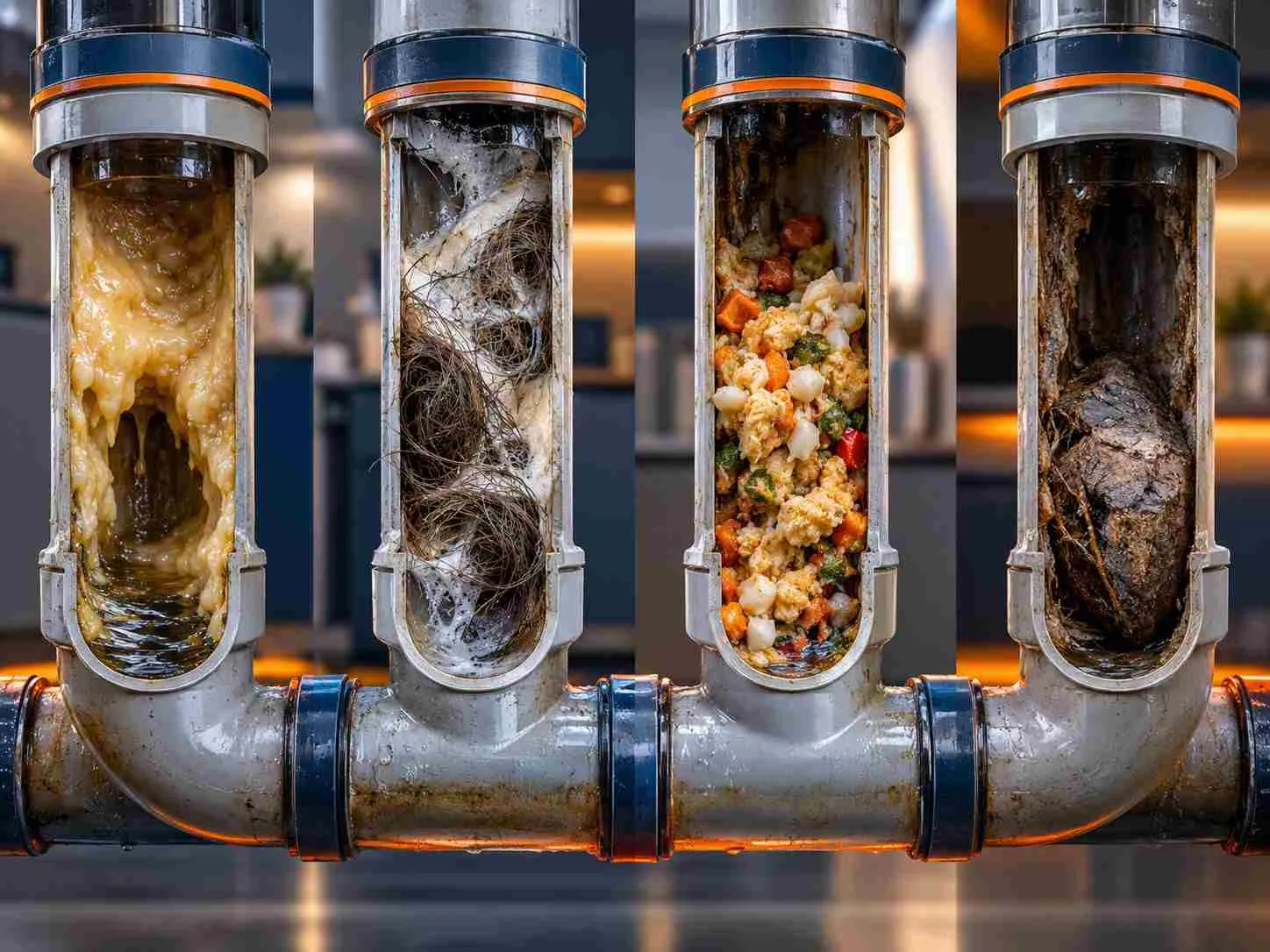
Chemical treatment is especially questionable when the symptom suggests something other than a small organic fixture clog.
The Drain Is Completely Blocked
A chemical may remain concentrated in standing water rather than reaching the restriction effectively.
It can also create a splash hazard if someone later opens or mechanically works on the drain.
Several Drains Are Slow
Multiple affected fixtures can indicate a shared drainage problem rather than debris immediately below one sink.
Our multiple drains guide explains why that pattern needs a wider look.
The Clog Keeps Returning
Repeatedly pouring chemicals into the same drain does not explain why the problem keeps coming back.
See our clog causes guide for the different materials and conditions that can create recurring restrictions.
Root Intrusion Is Possible
Chemical drain cleaner cannot repair a cracked or defective underground pipe that allows roots to enter.
Our tree roots guide explains why root removal and pipe repair are separate issues.
What Should You Consider Instead?
The right response depends on the type of problem.
Remove Accessible Debris
Hair or visible material near a drain opening may be removable without introducing chemicals deeper into the plumbing.
Use Preventive Habits
Keeping grease, food solids, hair, wipes, and inappropriate waste out of drains reduces the material available to form future restrictions.
See our drain maintenance guide for preventive habits.
Use the Right Mechanical Method
Some blockages are better suited to mechanical clearing rather than chemical treatment.
Our jetting comparison explains how snaking and hydro jetting solve different drainage problems.
Investigate Recurring Problems
A blockage that keeps returning may require inspection or a different cleaning approach rather than another bottle of drain opener.
Our camera inspection guide explains when looking inside the line can add useful information.
What If Drain Cleaner Is Left Over?
Do not automatically pour unwanted chemical cleaner down another drain or place it in ordinary household waste.
Sarasota County accepts household cleaners and other chemicals at its Chemical Collection Centers for safe disposal. Current county guidance specifically includes cleaners and hazardous household chemicals among accepted materials. (Sarasota County hazardous waste)
When Should You Stop Using DIY Drain Cleaner?
Stop experimenting with chemical products when:
the drain is completely blocked;
the same clog repeatedly returns;
wastewater is backing up;
several fixtures are affected;
you suspect damaged piping or roots;
you have already used another chemical product;
you do not know what is already inside the drain.
At that point, identifying the actual problem is more useful than adding another chemical.
Frequently Asked Questions
Can I use drain cleaner repeatedly?
Repeated use is not a good substitute for determining why the same drain keeps clogging. A recurring restriction deserves investigation.
Can I mix two different drain cleaners?
No. Never mix drain cleaners or combine them with bleach, acids, ammonia, or other household cleaning products.
Is enzyme drain cleaner the same as chemical drain opener?
No. Enzyme-based products work differently from strong acid or alkaline drain openers and generally act more slowly.
Should I tell a technician that I used drain cleaner?
Yes. Tell anyone working on the drain which product was used and approximately when it was added.
Does chemical drain cleaner fix damaged pipes?
No. A chemical may affect some blockage materials, but it cannot repair cracks, collapsed piping, displaced joints, or other structural defects.